Casio SA-81: Play Without a Computer, but Bring the Power

The SA-81 supplies its own tones and speakers, unlike a MIDI controller. Here is what its mini keys, onboard controls and separately sold power options mean.
The Casio SA-81 makes its own sound through built-in speakers: you do not need a laptop, music software or an external sound module to hear it. You do need a power source. Six AA batteries or the specified Casio AC adapter are sold separately.
That makes it a different purchase from a small MIDI controller. Choose this black-and-white SA-81 for playing its onboard sounds; do not buy it expecting a USB controller for recording software.
The sounds live inside the keyboard
The 44 mini keys play 100 built-in tones. Dedicated Piano, Trumpet and Drums buttons let you jump to those sounds without scrolling through the full list. Two onboard speakers provide the sound output.
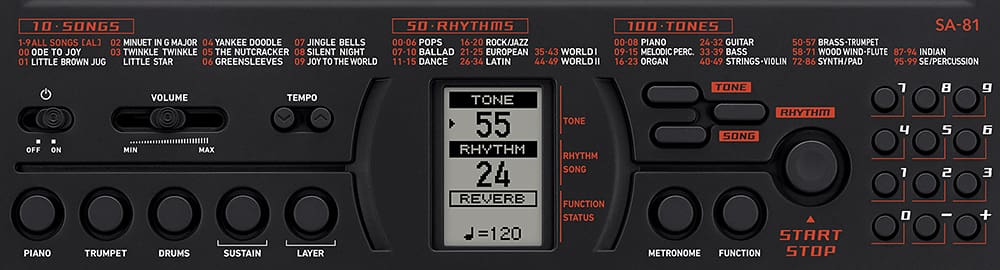
Layer lets you combine two tones on the keys. The Sustain button extends a sound after you release a key; it is an onboard function, not a promise of a sustain pedal or pedal socket.
For playing along, there are 50 rhythm patterns and 10 built-in songs. The melody-off function removes a song's melody so you can play that part yourself. The metronome and adjustable tempo offer a separate way to keep time without a backing song.
Plan the power before the first note
For battery use, supply six AA batteries of a type specified in the manual. For an outlet, Casio lists the AD-E95100L adapter, rated for this keyboard's DC 9.5V input. Neither power option is included. Do not substitute a USB charger or choose an adapter just because its plug appears to fit.
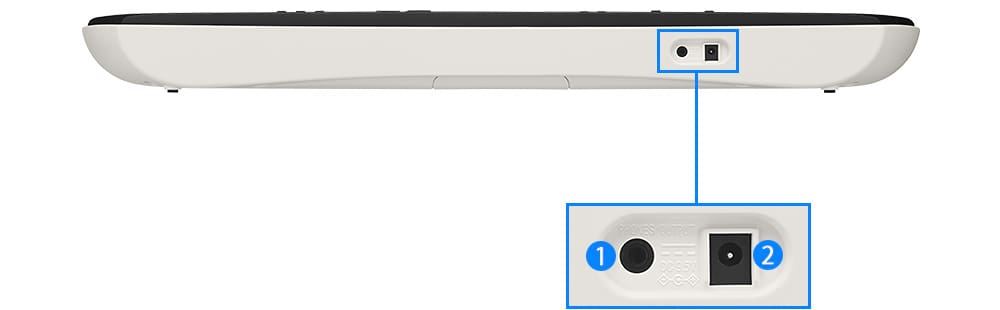
The other socket is PHONES/OUTPUT for stereo mini-jack audio. It is separate from the power connection—not a USB port or a pedal input. Headphones are an additional purchase, not a requirement for hearing the built-in speakers.
Mini keys change the playing surface
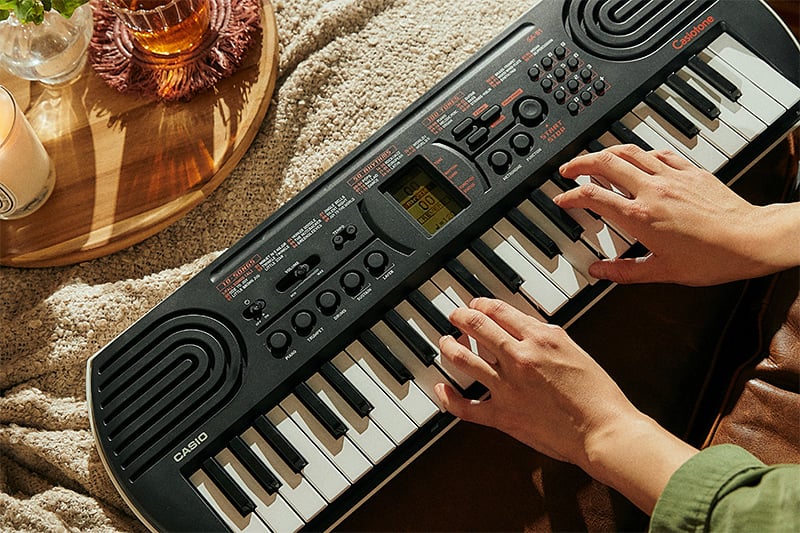
The SA-81 offers 44 physical mini keys. Octave shift moves their pitch up or down; it does not add keys you can reach at once. A piece that needs a wider simultaneous span still has that limitation. Do not expect the layout or feel of a full-size, weighted piano keyboard.
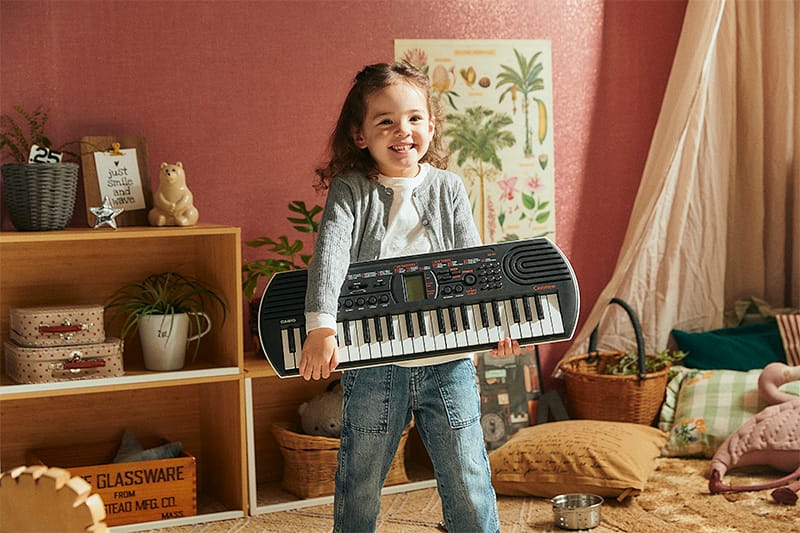
This is the useful trade: a self-contained instrument with accessible sounds and rhythm controls, but a smaller playing surface. It is not simply a miniature version of a full piano, nor does its small size establish a fit for every player's hands.
This guide uses Casio documentation and supplier photographs, not hands-on testing. Check that the listing identifies SA-81 / SA-81H3; this guide does not cover the older SA-76.
Elige un artículo de esta guía