Do Your Wood Projects Need a Pocket-Hole Jig?

Keep a jig or joinery method that already works. Consider the Kreg KPHJ320 only for recurring pocket-hole work with material, equipment and setup needs confirmed.
Keep a pocket-hole jig or joinery method that already meets your needs. Consider another jig only for a recurring wood-project task your current setup cannot cover, with the material, drill, holding equipment and screws already planned.
The Kreg Pocket-Hole Jig 320 (KPHJ320) is a portable pocket-hole jig. It guides drilling for pocket-hole joinery; it does not supply the drill or turn a kit of components into a complete workshop.
Start with the joint your project needs
Look at your planned projects before choosing a tool. What pieces need joining, does the project call for pocket holes, and what is missing from the tools you own? If an existing jig is adequate, keep it. If your current joinery method meets the project’s requirements, changing methods just to use a new tool adds another setup to learn.
A specific, recurring pocket-hole task gives this purchase a purpose. A vague intention to do more woodworking does not yet establish that need. This guide is a purchase check, not advice on structural or load-bearing joints.
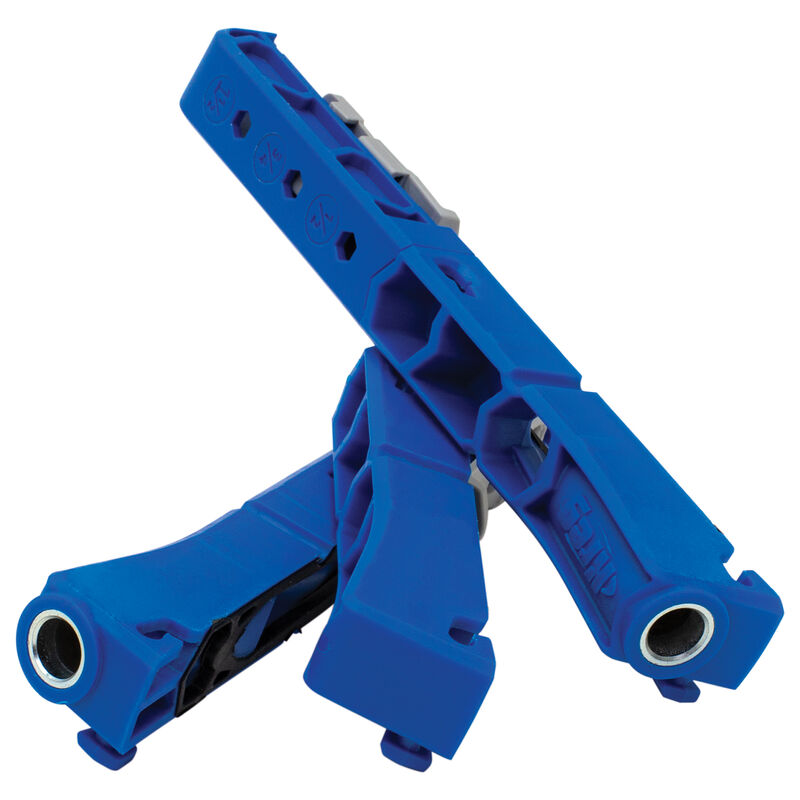
The KPHJ320 has two drill guides, material-thickness stops and a removable spacer. Its modular arrangement allows different guide spacing. Check the complete instructions against your pieces rather than treating the partly separated photo as a configuration to copy.
Check material fit before the kit contents
Kreg lists a 1/2- to 1-1/2-inch material-thickness range, with stops marked 1/2, 3/4 and 1-1/2 inches. The selected listing agrees on the overall range. Those numbers are a starting point for checking fit, not approval for every material or joint within them.
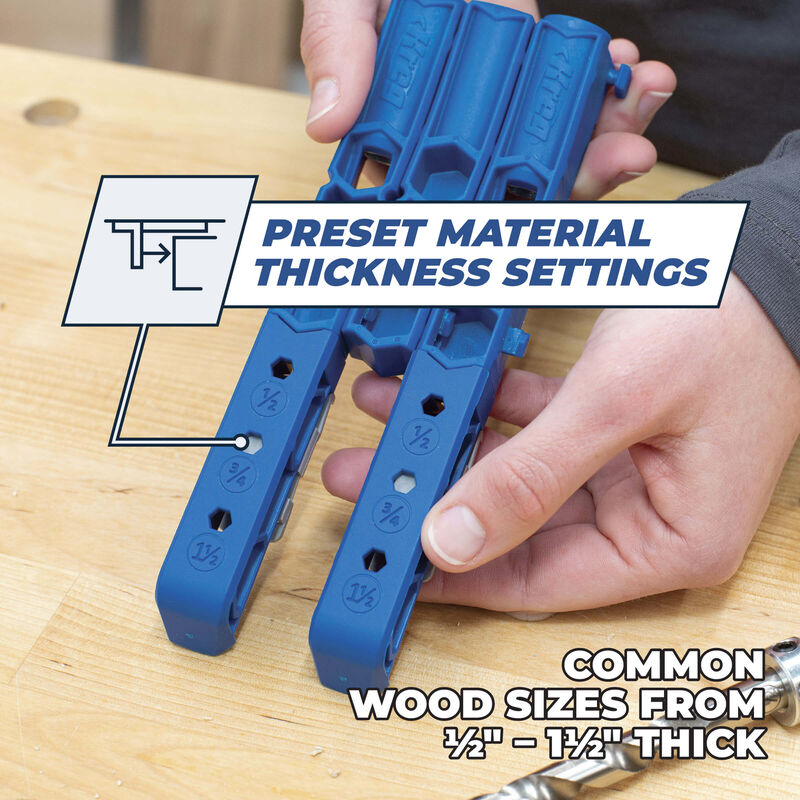
Confirm the actual material thickness and intended project against the full manual. If that match is unresolved, pause the purchase. This guide does not prescribe a stop position, drilling technique or screw length.
Separate the kit from the rest of the setup
The selected kit includes two guides with stops, a spacer, drill bit and stop collar, driver bit, thickness gauge/hex wrench, clamp pad adapter, carrying case and 40 sample screws. The cover shows core components, not the full contents: the case and screws are absent from that photo.

The clamp pad adapter is not a clamp. Plan a suitable drill, work support and clamping arrangement separately. Check the exact jig and drill instructions and how the workpieces will be held before deciding that your existing equipment covers the job.
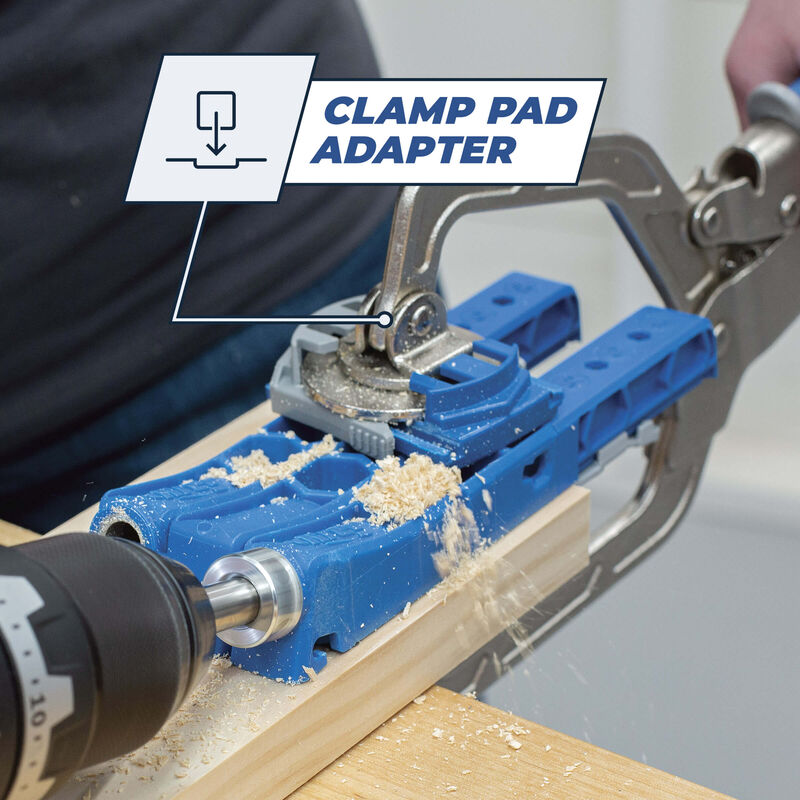
The application photo illustrates the adapter. Its drill, clamp, wood and bench are not included, and the still is not a complete setup or protective-equipment demonstration. Do not infer an operating method from it.
Allow for screws, workspace and setup
The 40 sample screws do not establish that the kit has the right screws, or enough of them, for every project. Identify the pocket-hole screws your planned materials and project require using the complete product guidance. Include any missing supplies in your decision rather than treating samples as a project-ready assortment.
Also decide where the work will happen. You need room for the pieces, support, drill and holding equipment, not just a storage spot for the jig’s case. Learning the setup, allowing for practice, clearing up and storing the components are part of choosing this workflow.
If you prefer an adequate method you already know, keep it. If you cannot yet name the project, material match or holding arrangement, wait until those questions have answers.
Choose only for the unmet task
This guide covers one Kreg KPHJ320 Pocket-Hole Jig 320 kit, selected as Jig, Blue. It is not a clamp bundle. Confirm that selection before ordering; a similarly named kit may have different contents.
Consider it when recurring planned pocket-hole work is the missing capability and the material, equipment, screws and workspace checks are complete. Otherwise, keep an adequate owned jig or existing joinery method. View the Kreg KPHJ320 Jig kit on Amazon.
How we chose
This source-based guide uses the exact selected Amazon listing, matching US Kreg product information, its linked owner’s manual and original maker photos. We have not tested the jig. Follow the complete instructions supplied with the exact jig and drill; this article is not an operating tutorial.