Squirrel Buster Standard: Will Your Hanging Spot Work?

A nearby fence rail or branch can let a squirrel reach the seed without loading the closing shroud. Check the Squirrel Buster Standard’s hanging spot before buying.
Will the weight-closing mechanism work at your intended fence or branch location? Only if reaching the seed puts enough weight on the feeder’s moving outer shroud. A nearby foothold can let a squirrel reach the food without triggering that closure.
That makes the hanging spot the first buying decision for the Brome Squirrel Buster Standard 1057-V01. Brome calls for at least 18 inches of clearance around the feeder. If your chosen spot cannot provide it, change the location before ordering.
Why a nearby foothold defeats the closure
The Standard’s feeding openings line up with the seed ports when the shroud is open. According to Brome, a squirrel climbing onto the feeder adds weight that pulls the shroud down and closes access. An animal supported by a fence rail or branch may reach the seed while keeping its weight off that moving part.
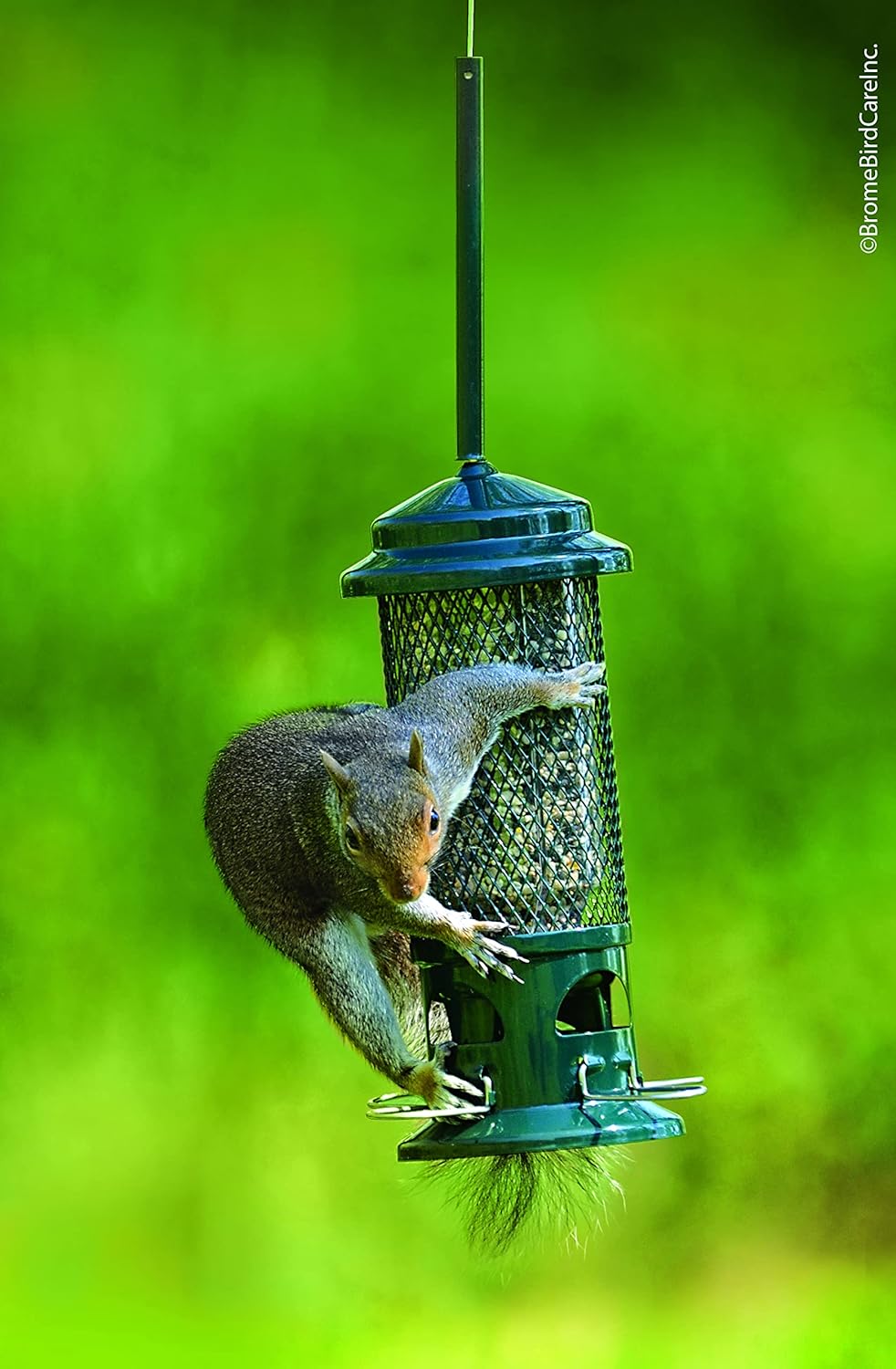
The spring threshold is adjustable, but tension changes how much weight triggers the closure. It cannot correct an approach that avoids loading the shroud. Do not buy the feeder expecting a tension adjustment to compensate for a convenient but too-close fence or branch.
Measure from the feeder, not just the hook
Picture the feeder hanging in its final position, then inspect the fence rails, branches and other nearby footholds around it. Measure the open space from the feeder toward those surfaces. Brome’s 18-inch minimum applies around the feeder, not just between the hook and one convenient landmark.

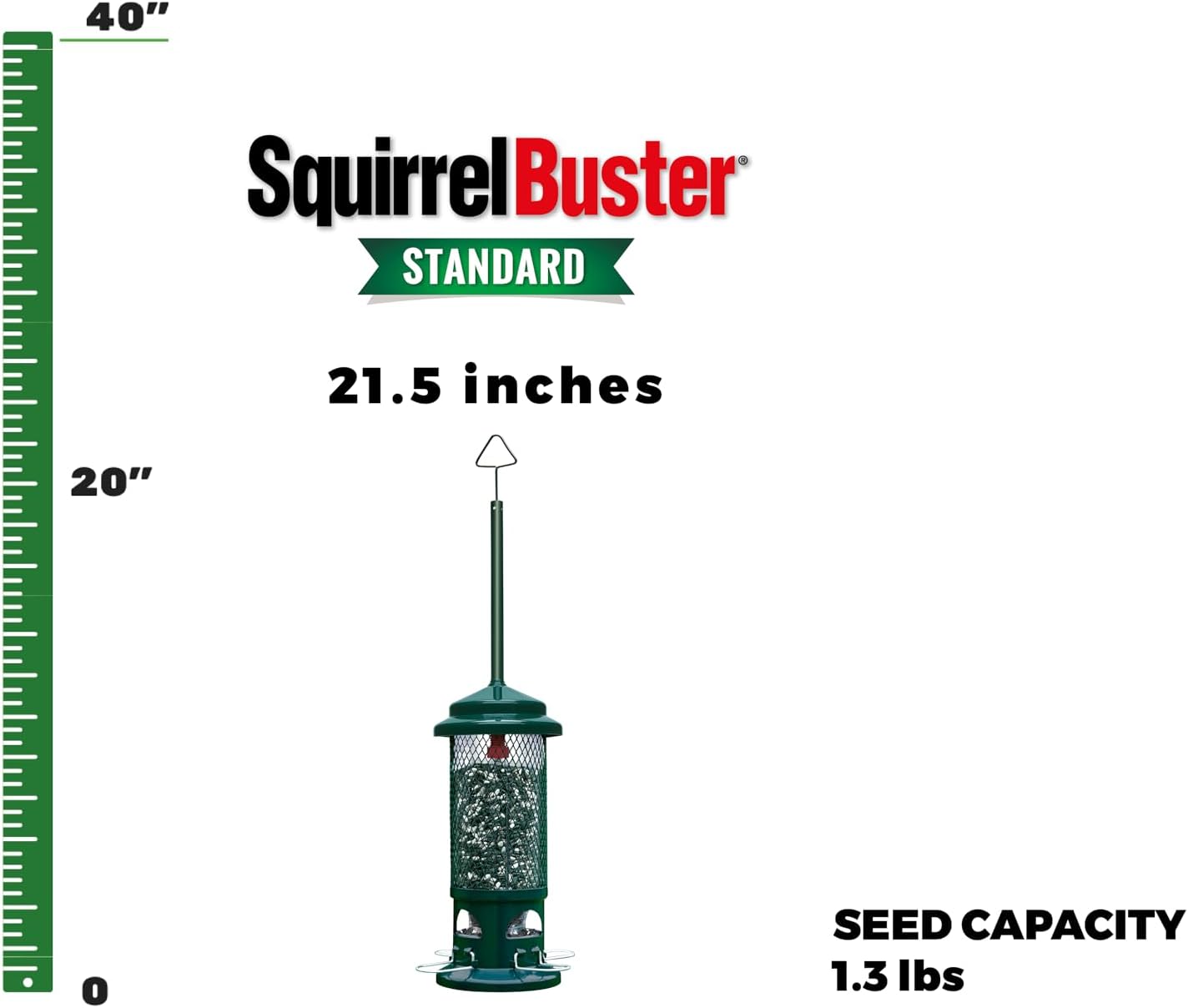
For that placement plan, use the Standard’s 21.5-inch height with its hanger, as listed by Brome’s support page. A measurement of the body alone leaves out part of the hanging assembly. Check where the complete feeder will sit relative to the nearby rail or branch.
If a squirrel can stay on a nearby surface and reach the seed, resolve that route first. A longer hook is only useful if the resulting location actually provides the required clearance; this guide does not verify a particular hook, bracket or supporting structure.
The location also has to work for care and wildlife
Even with clearance, this feeder is not a solution for every animal. Brome’s exclusions include chipmunks, raccoons, and juvenile red, Douglas and flying squirrels. If those are the visitors you need to deter, do not assume this closing mechanism will address them.
Leave yourself practical access to remove and clean the feeder and clear discarded seed underneath. Brome says its components separate by hand; its support guidance says the seed-tube and spring assembly need not be dismantled for cleaning and suggests a bottle brush for hard-to-reach areas.
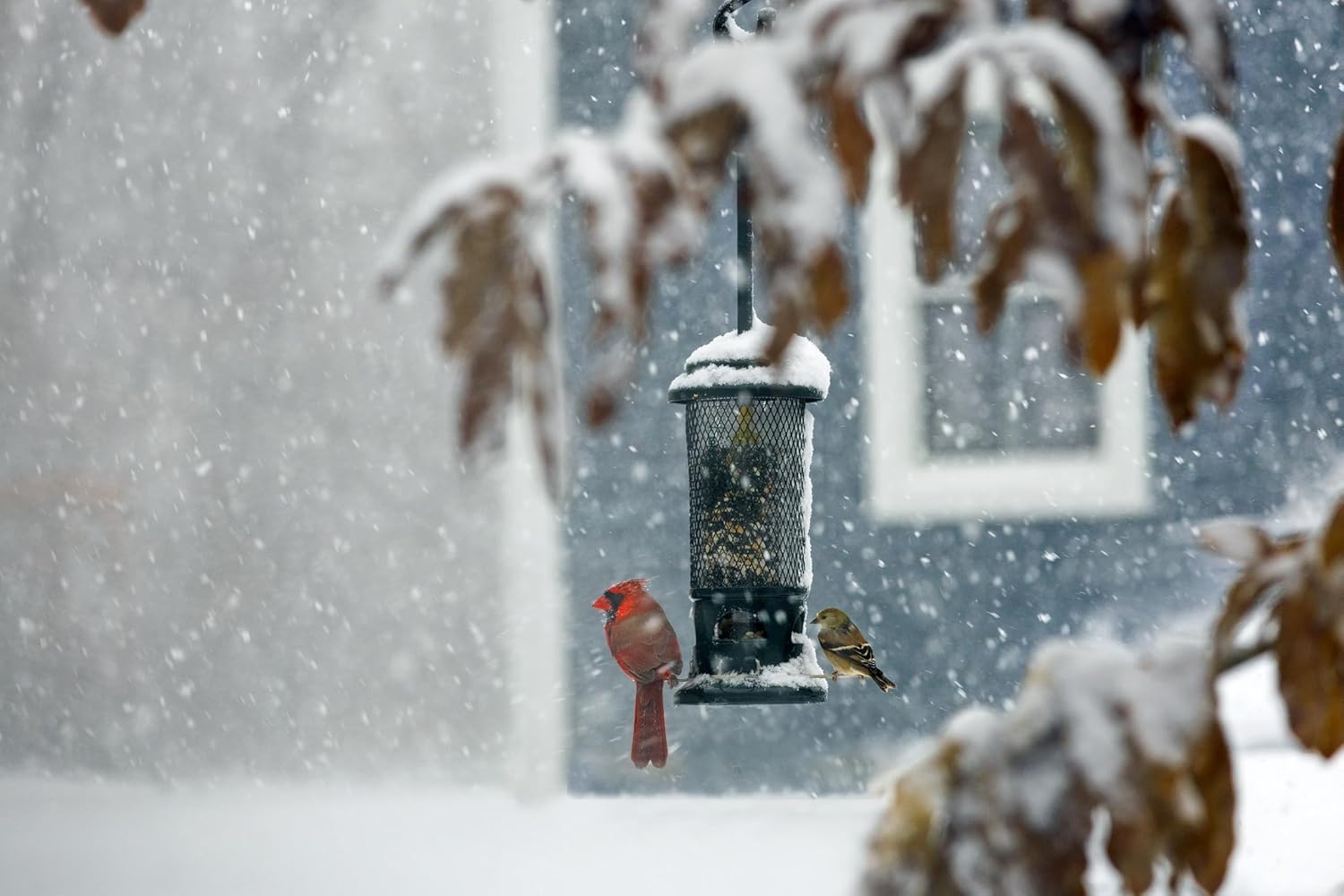
The U.S. Fish & Wildlife Service recommends cleaning feeders at least every two weeks and clearing old or discarded seed below them. It also identifies disease, predation and window-collision risks. The 18-inch mechanical clearance does not resolve those risks. Check local wildlife advisories and any property restrictions before choosing a feeding location. If feeding is discouraged locally, or you cannot maintain the feeder and its surroundings, hold off on buying.
For this Standard, the decisive check is whether your hanging plan makes an approaching squirrel load the shroud instead of reach around it. Confirm that route and the care access before selecting 1057-V01, 1 Pack, Bird Feeder. This guide covers one feeder, not a pole, bracket or seed bundle.
View the Brome Squirrel Buster Standard on Amazon.
Based on Brome’s Standard product and support pages, the matching Amazon listing, and U.S. Fish & Wildlife Service guidance. Listing images are supplier material. We have not physically tested this feeder or verified your installation.
Choose the item from this guide